RCAF Station Guard House circa 1940. The Airman on sentry duty is wearing grey Web Equipment, Pattern 1925 over his greatcoat and is armed with a .303 calibre Enfield Pattern 1914 rifle.

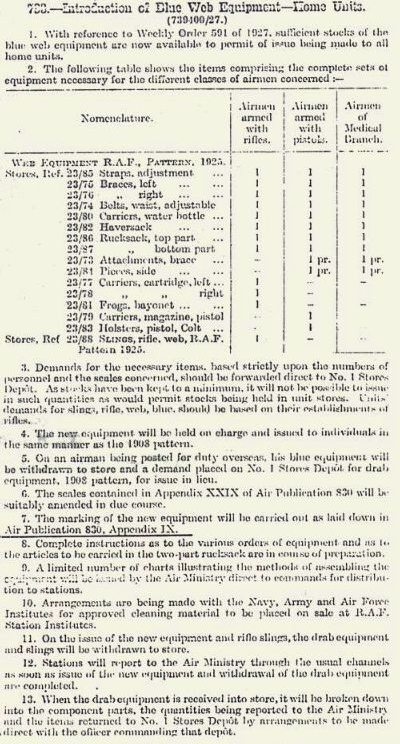
When the RCAF entered the war in 1939, the standard web equipment was the same as that used by the RAF, ie: Web Equipment Pattern 1925 (W.E. Patt.'25) Made from blue/grey dyed cotton web, it was manufactured in both England and Canada. Initially, all W.E. Patt.'25 used by Canada was made in England. Production in quantity of W.E. Patt.'25 did not begin in Canada until 1940.
The W.E. Patt.'25 set for Airmen armed with rifles consisted of right and left cartridge carriers, waistbelt, braces, bayonet frog, waterbottle with carrier, haversack, and a two part rucksack. The cartridge carriers formed the front part of the belt and the belt buckle.
The set for Officers and Airmen armed with revolvers or pistols consisted of a 3 piece waistbelt, brace attachments, braces, pistol holster and ammunition pouch. The Officer's waistbelt differed from the Airman's in that it had adjustable brace attachments and no stud for the bayonet frog. After 1941 many of the pistol sets appear to have been whitened for use by Service Police.

The basic set of W.E. Patt.'25 as worn with the top part of the rucksack. Note the rucksack shoulder braces connected to the loops at the top of the cartridge carriers. Each cartridge carrier is capable of holding 15 rounds of .303 calibre ammunition in 5 round clips, for a total of 120 rounds. A lesser quantity of .30 calibre ammunition could be carried when armed with an Enfield Pattern 1917 rifle.
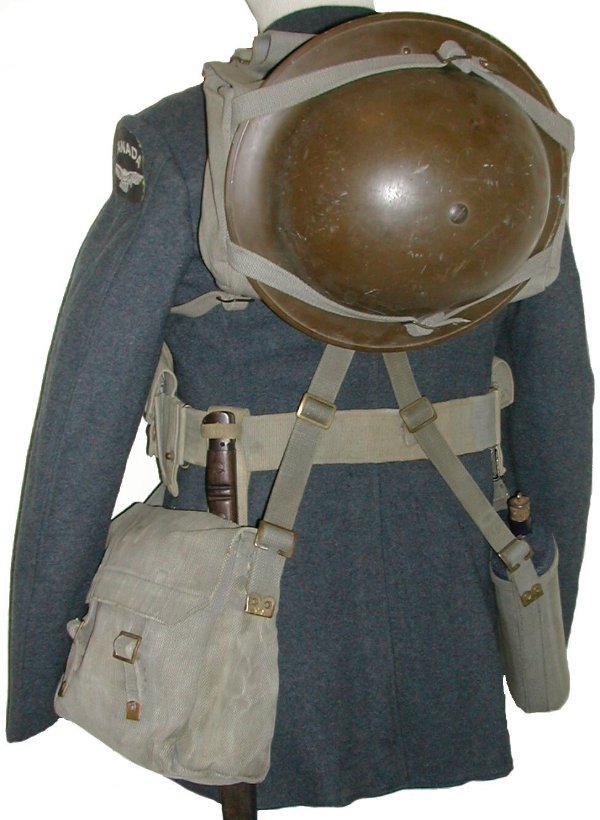
Rear view of the W.E. Patt.'25 illustrating the method of carrying the helmet on the rucksack. According to dress instructions, the haversack is worn on the left, suspended by the brace ends, with the top edge even with the bayonet barrel ring. The bayonet barrel ring is worn to the rear.

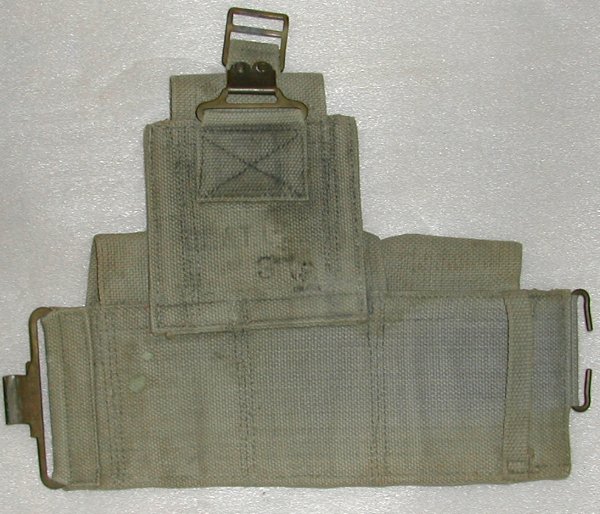
Front and back views of the right cartridge carriers.

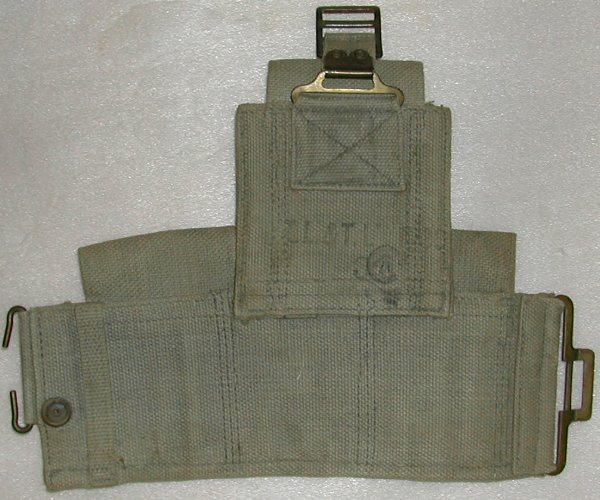
Front and back views of the left cartridge carriers.
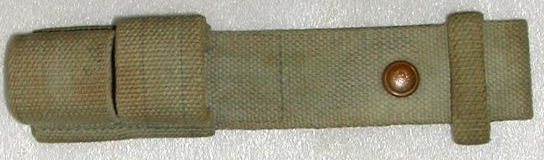
Bayonet frog
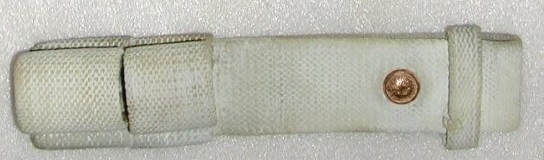
Whitened bayonet frog for ceremonial use.

Detail of the waterbottle and carrier. The carrier is Canadian made and bears the marks of Zephyr Loom & Textile and the date 1940 on the inside. The water bottle was identical to the army issue bottle, except that the cover was in blue wool felt instead of khaki brown.

Closeup view of the water bottle carrier markings.

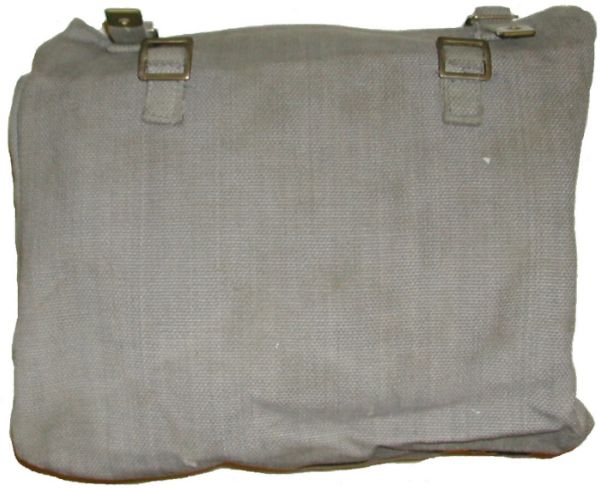
The top and bottom components of the rucksack.

The complete rucksack as worn in marching order.

Detail of the maker's mark and Canadian property stamp on the inside flap.

Rear view of the rucksack showing the shoulder braces.
Web Equipment, Pattern 1925 Revolver Set

Assembled Airman's Pattern Waistbelt.
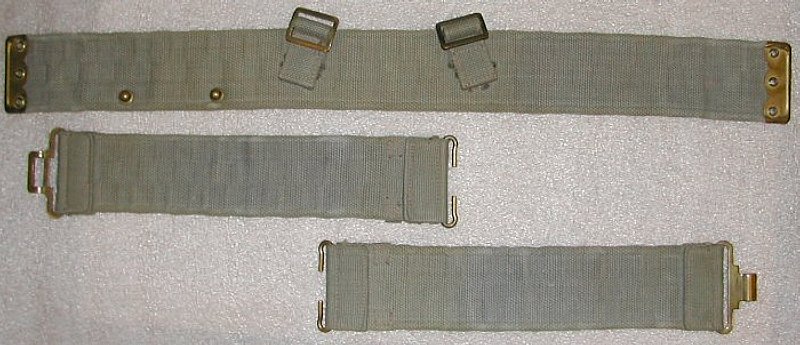
The component parts of the waistbelt.

Waistbelt detail showing typical markings.

Revolver ammunition pouch of British manufacture.
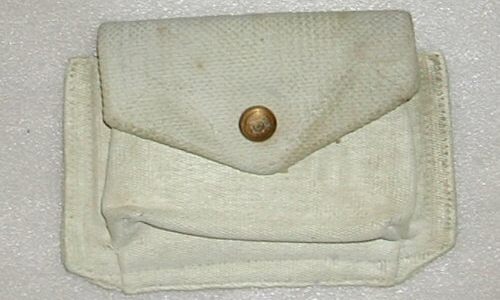
Whitened revolver ammunition pouch of Canadian manufacture.

Holster for large frame revolvers such as the Webley Mk VI.
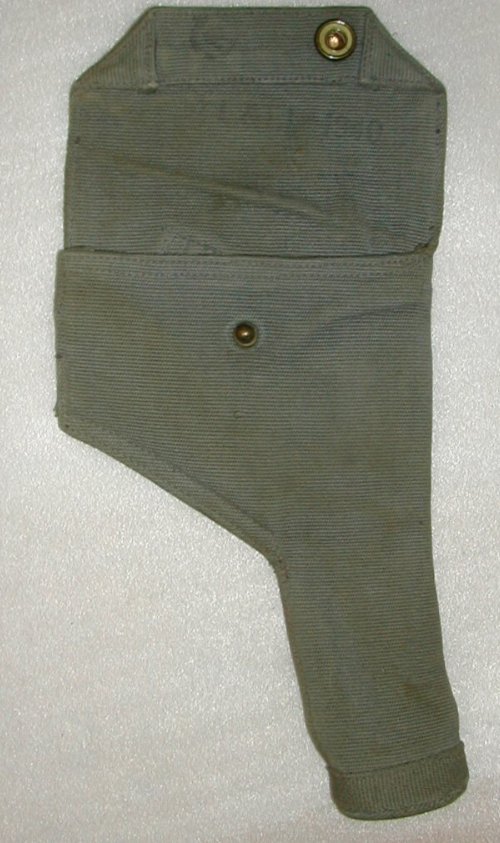
Flap open, showing the manufacturer's mark (ZL&T 1940) and C Arrow property stamp.

Whitened holster for small frame revolvers.

Flap open, showing the manufacturer's mark (MS&U 1940 or 41) and C Arrow property stamp.
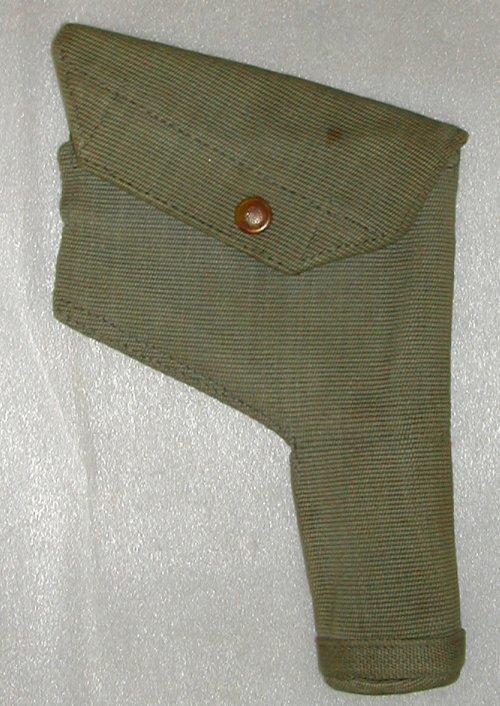
Pattern 1925 revolver holster of British manufacture.
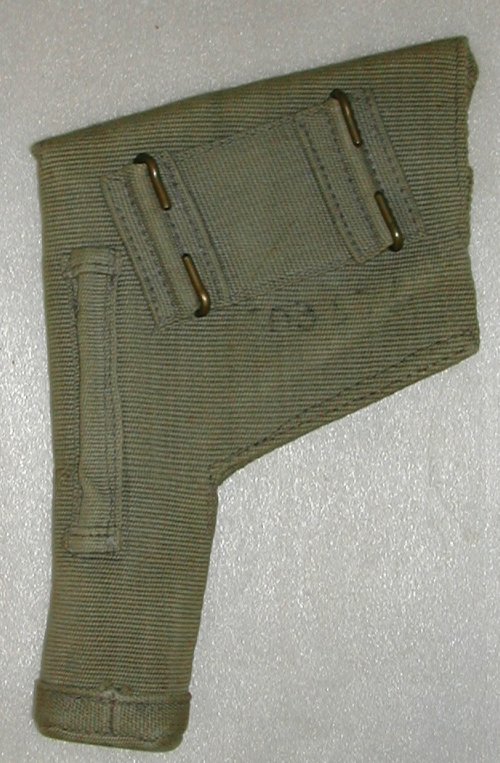
Back view of the holster showing the external sleeve for the cleaning rod and belt clips.
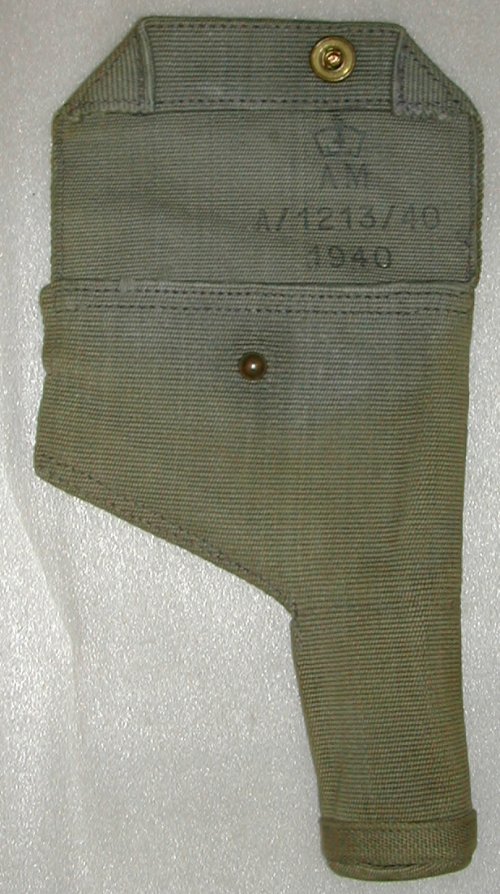
Flap open, showing the date and Air Ministry property stamp.
For a more in depth study of the patterns, production and history of Commonwealth Web Equipment visit the highly recommended
Karkee Web.
If you accessed this page from an outside link or search engine and do not see a navigation bar on the left side of the page, click HERE to go to the Canadian Military Police Virtual Museum main page.