Seamen with the ranks of Petty Officer and Chief Petty Officer wore Service Dress in a pattern colloquially known as "fore and aft rig". In addition junior ratings "not dressed as seamen" such as Officer's Servants, Ship's Corporals etc. wore this rig. The service dress consisted of either a single or double breasted jacket, white shirt and collar, black necktie, trousers, and a Service Dress cap similar to those worn by commissioned officers. The single breasted jacket was made of rough blue serge with a 4 button front and was known as "Jacket, S.B. Serge". The double breasted jacket (Jacket, D.B. Cloth") was similar in cut to the Officer's jacket but distinctive in that it had a 6 button closure as opposed to the Officer's 8 button closure. The single breasted jacket went out of use in the 1930s but was still worn into the 1940s by long service Petty Officers in posession of it. The double breasted jacket was worn by Petty Officers in the RCN until unification. A jacket of similar style was reintroduced for all ranks in the Canadian Navy in the early 1980s.
Except in minor details in material and construction, the style of Petty Officer's uniforms remained virtually unchanged from the First World War until Unification.
Rank insignia was worn on the arms, or in the case of Chief Petty Officers, on the cuffs. Branch badges, where applicable, were worn on the jacket lapels.

The uniform cap and badge as worn by a Chief Petty Officer in Class I Rig prior to 1920. It was generally similar in appearance to the officers pattern cap, but had a smaller crown and brim. In 1920, Chief Petty Officers were authorized a cap badge with the anchor surrounded by laurel leaves. The cap and cap badge as illustrated, was then worn by Petty Officers up to the 1940s. Detachable white cloth and oilskin covers were provided for this cap.
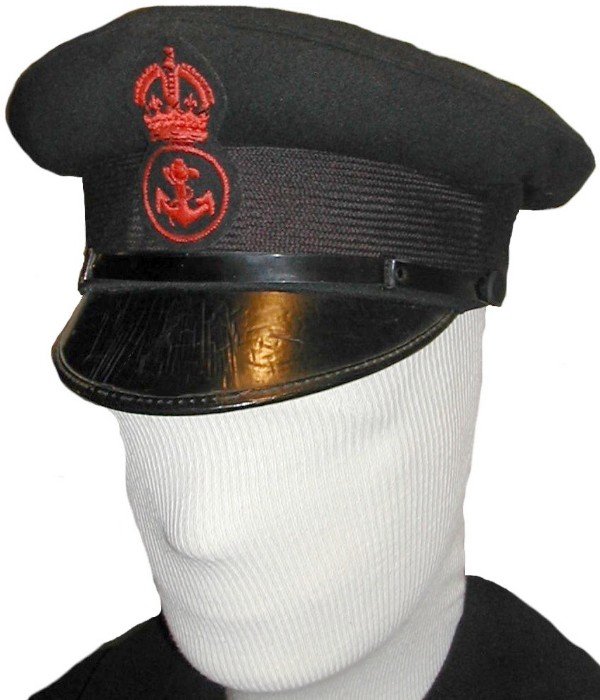
The cap and red embroidered cloth cap badge as worn by a rating in Class III Rig. The cap is the same pattern as that worn by Petty Officers in Class I Rig, only the cap badge was changed.
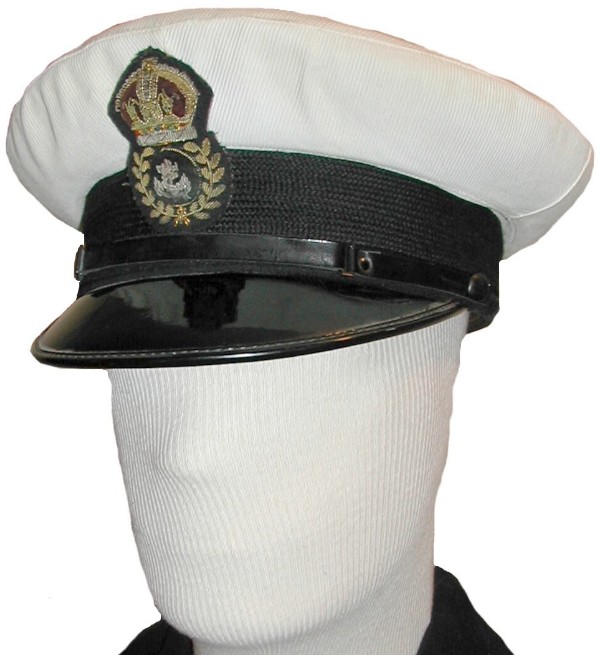
A Chief Petty Officers' cap with detachable white cloth cover circa 1945. It was worn with Class I Rig and this example was made with a larger body and brim than the previous pattern. This cap was virtually identical to that worn by commissioned officers.
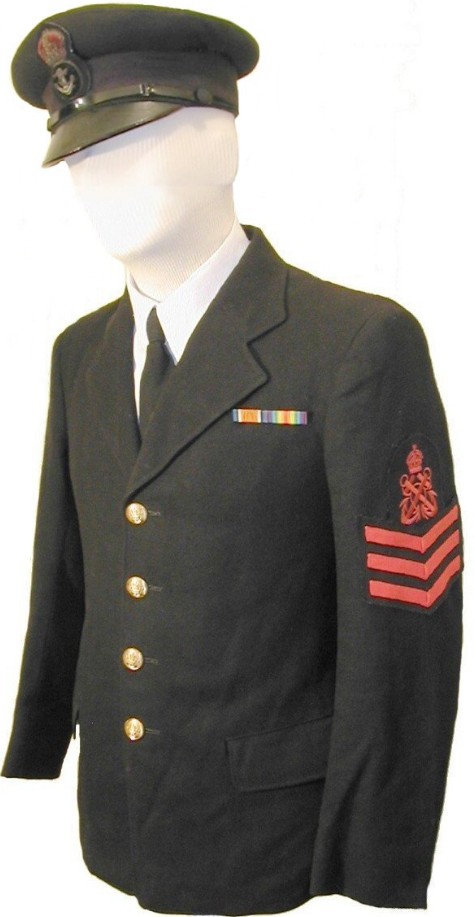
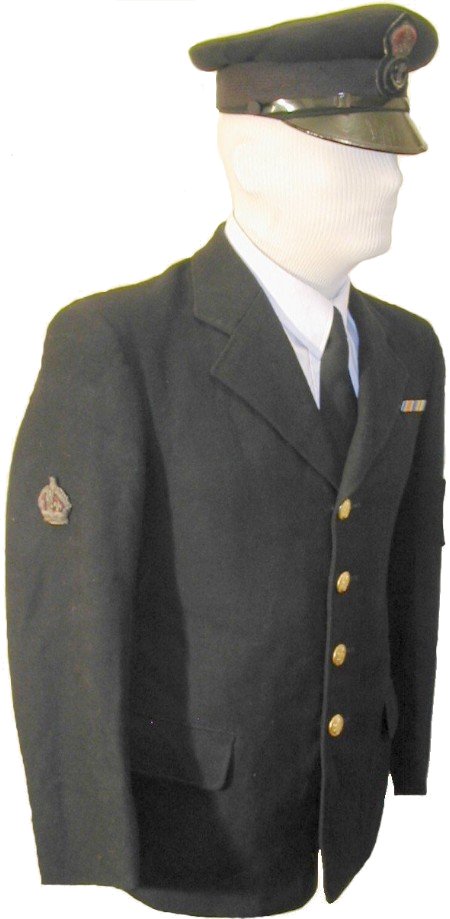
The Jacket, S.B. Serge worn by a Regulating Petty Officer circa 1925 - 30. Rank insignia is worn on the left arm, the Regulating Petty officer badge is worn on the right arm. Ribbons for First World war service are worn. Worn with a white shirt and black tie.
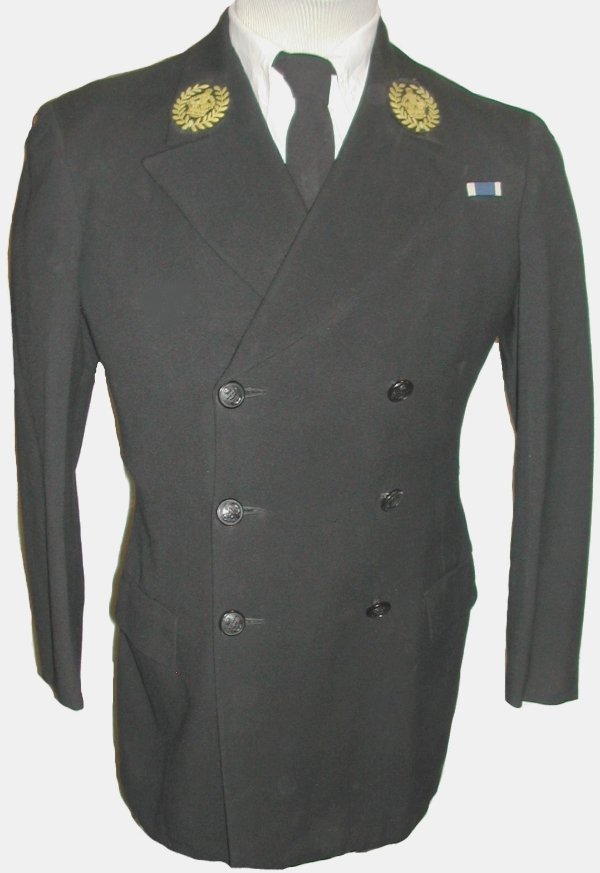

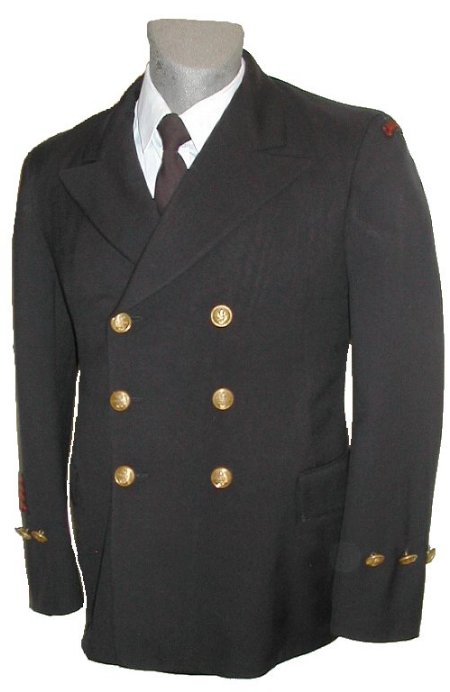
The Jacket, D.B Cloth, worn by a Chief Petty Officer. Rank insignia is in the form of 3 buttons on the cuff. Naval legend has it that this type of insignia originated in the late 18th century. Boys, some as young as 12 years old, were appointed as Midshipman, roughly equivalent to today's Officer Cadets. 3 buttons were sewn onto their jacket cuffs in order to prevent them wiping their noses on their sleeves!